
Holding the Core of High-End Polyolefins: Watson’s Metallocene Catalysts
News originally published by
EIN Presswire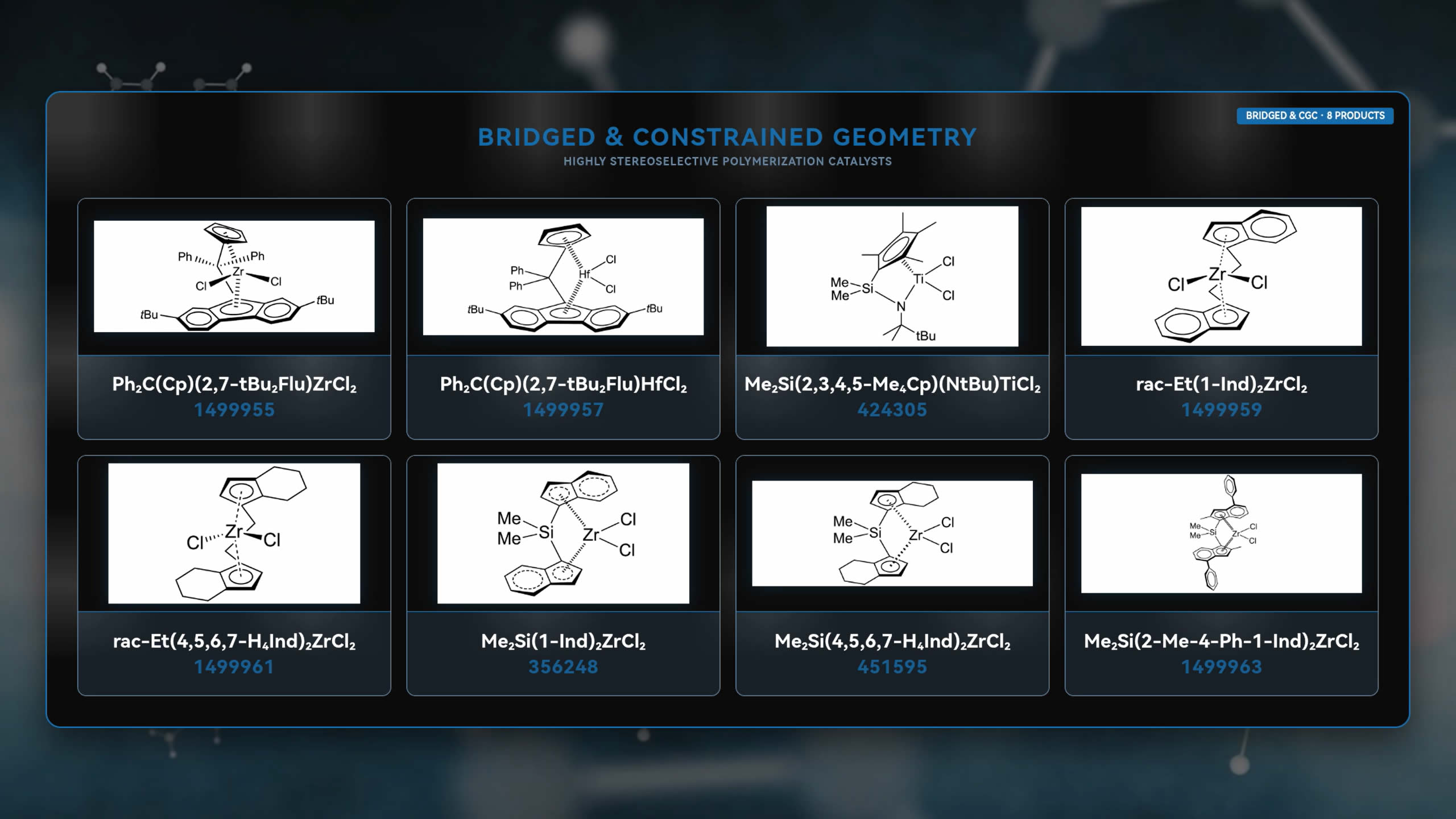
bridged (including constrained geometry)

A Global Market Still Accelerating
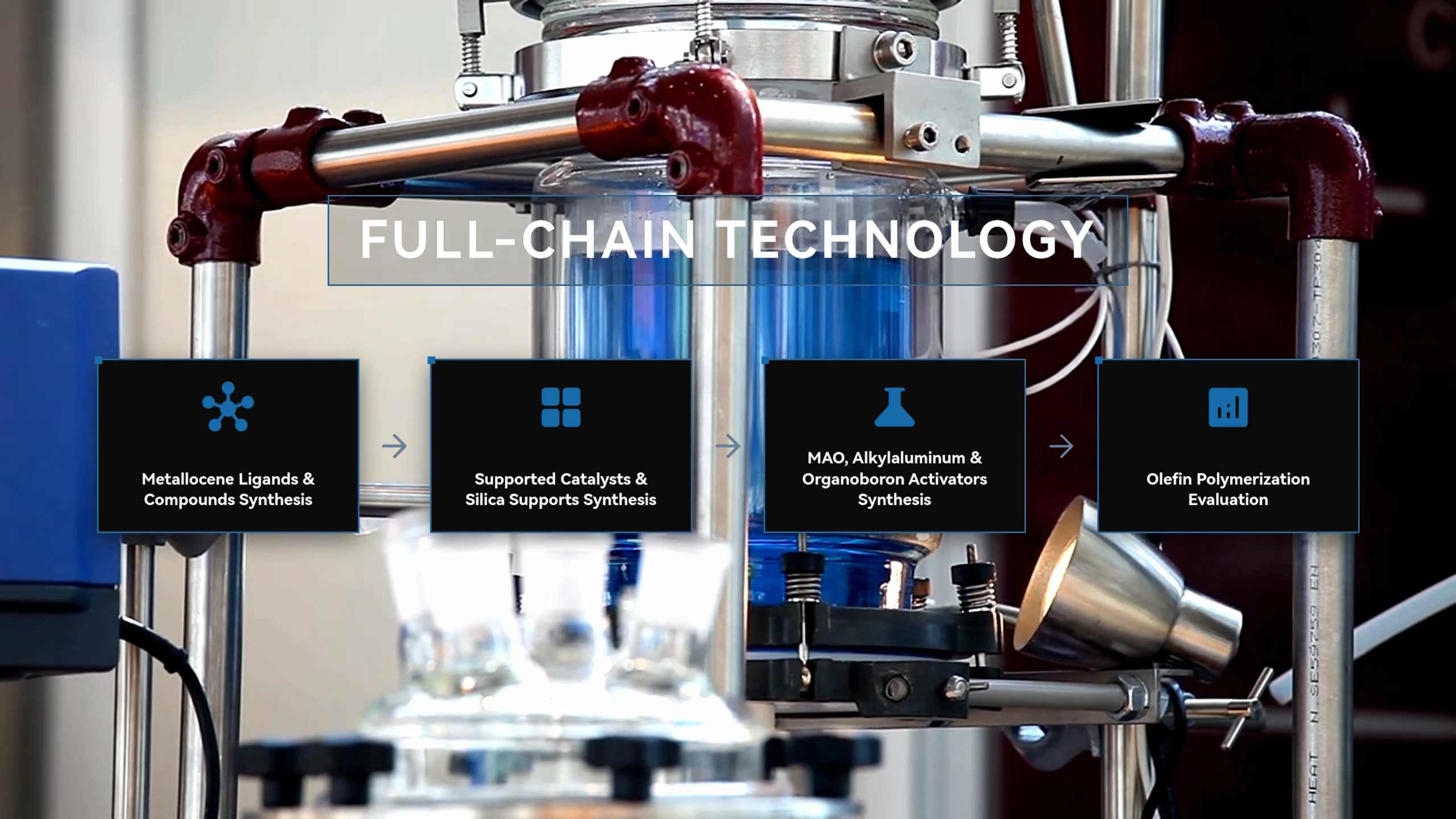
Full chain technology
That allows it to serve markets that have already reached global scale, such as photovoltaic POE, packaging film and lubricant base oils
LONDON, NOT APPLICABLE, UNITED KINGDOM, November 26, 2026 /EINPresswire.com/ -- Polyolefins are the world's most widely used synthetic resins, and metallocene catalysts determine how far the most advanced segment of the family can go.According to Fortune Business Insights, the global metallocene polyolefin market is projected to grow from US$21.68 billion in 2025 to US$57.51 billion by 2034, a compound annual growth rate of about 11.45%. Metallocene polyethylene alone exceeded US$6.5 billion in global consumption in 2022, with packaging film as its largest application and emerging fields such as solar energy expanding quickly. At the same time, industries including automotive lightweighting, healthcare, optics, wind power and aerospace continue to demand high-performance, tailor-made polymers, making "high-end and differentiated" the clearest direction for the global polyolefin industry.
The most critical link in this value chain is the catalyst. Unlike conventional Ziegler-Natta catalysts, which have multiple active sites, metallocene catalysts are single-site catalysts: molecular weight distribution, comonomer incorporation and stereoregularity can all be precisely engineered through molecular design, which is exactly what high-end products such as POE (polyolefin elastomer) require. Industry analyses of POE point out that its technical barriers lie in three areas: metallocene catalysts, higher α-olefins and solution polymerization. Commercial POE is currently produced mainly with bridged metallocene catalysts and constrained geometry catalysts (CGC), together with cocatalysts such as methylaluminoxane (MAO). Because these barriers are high, global POE supply has long been concentrated among a handful of producers, including Dow, ExxonMobil, Mitsui Chemicals, LG, SK-SABIC and Borealis, with combined capacity of roughly 1.68 million tonnes per year. In other words, whoever masters the synthesis of ligands, main catalysts and activators holds the "core" of high-end polyolefins.
Watson is determined to change this landscape at this critical link. The company is dedicated to metallocene catalyst materials and, operating under a global brand license from ChemWhat, has built a complete product system covering three categories: core metallocene compounds, activators and supports. It has so far developed 14 products. Among the unbridged structures are
bis(1-n-butylcyclopentadienyl)zirconium dichloride (33714)
bis(1-n-butyl-3-methylcyclopentadienyl)zirconium dichloride (33690)
bis(indenyl)zirconium dichloride (131434)
together with the asymmetric indenyl/substituted-cyclopentadienyl structures 1499949 and 1499953.
Among the bridged and constrained-geometry products are the diphenylmethylene-bridged zirconium and hafnium complexes (1499955 and 1499957); the CGC titanium catalyst (424305) for ethylene and higher α-olefin copolymerization; racemic ethylene-bridged and dimethylsilyl-bridged bis(indenyl)zirconium complexes and their tetrahydroindenyl derivatives (1499959, 1499961, 356248 and 451595); and 1499963, designed for highly stereoselective polymerization.
On the activator side, Watson supplies methylaluminoxane (MAO) as a 10% toluene solution and has mastered the synthesis of alkylaluminum and organoboron activators. All of the metallocene compounds above are of greater than 98% purity, providing a stable raw-material foundation for downstream catalyst preparation and polymerization evaluation.
These products are backed by a body of technology that spans the entire chain: synthesis of metallocene ligands and metallocene compounds; synthesis of supported catalysts and silica supports; synthesis of methylaluminoxane, alkylaluminum and organoboron activators; and olefin polymerization evaluation. This means Watson does not merely supply individual compounds. It can bring ligands, main catalysts, activators, supports and polymerization validation together on one technology platform and combine and tune them around each customer's target product, which matters greatly in an industry built on molecular design. This capability maps onto a series of downstream markets that span the globe.
In POE, photovoltaic encapsulant film is the fastest-growing application; some studies estimate that global demand for photovoltaic-grade POE resin will rise from roughly 390,000–430,000 tonnes in 2024 to roughly 460,000–530,000 tonnes in 2026, while demand for modified plastics driven by automotive lightweighting is another growth driver. Metallocene polyethylene (mPE), with its stiffness, clarity, heat-seal strength and environmental stress-crack resistance, is widely used in packaging film, pipe, injection molding and rotational molding.
For cyclic olefin copolymers (COC), global annual demand is about 80,000 to 90,000 tonnes, with capacity long concentrated among a few Japanese producers; applications range from smartphone and automotive lenses and AR/VR optical components to prefilled syringes, biologics and mRNA vaccine packaging, where cleanliness and stability requirements are exceptionally high.
Metallocene-based polyalphaolefin (mPAO) is a core feedstock for premium synthetic lubricants, used in wind turbines, rail transport, data-center coolants and even aerospace equipment. Large-scale global production has long been concentrated in three companies, ExxonMobil, INEOS and Chevron, and that high concentration of supply suggests there is still substantial room for catalyst innovation to unlock additional capacity.
From higher α-olefins, mPE, mPP, mPEP and mPOE to cyclic olefin copolymers and mPAO, these seemingly diverse product families share one core material: the metallocene catalyst. Watson brings products, technology and proprietary patented structures to this link of the chain. That allows it to serve markets that have already reached global scale, such as photovoltaic POE, packaging film and lubricant base oils, and also to supply materials for newer directions such as COC and mPP, where molecular structure must be controlled even more finely. Backed by a complete technology platform and the ChemWhat global brand license, Watson has both the capability and the confidence to work with partners across the global value chain to take high-end polyolefins into ever broader applications.
Jonathan Jones
ChemWhat News
+44 20 3608 9360
Visit us on social media:
Facebook
LinkedIn
X
YouTube
TikTok
Instagram
Legal Disclaimer:
EIN Presswire provides this news content "as is" without warranty of any kind. We do not accept any responsibility or liability for the accuracy, content, images, videos, licenses, completeness, legality, or reliability of the information contained in this article. If you have any complaints or copyright issues related to this article, kindly contact the author above.
